Posts Tagged ‘Contests’
 The ARRL has done it again!
 October 27th, 2016 |
  Author:
IARU HF World Championship contest
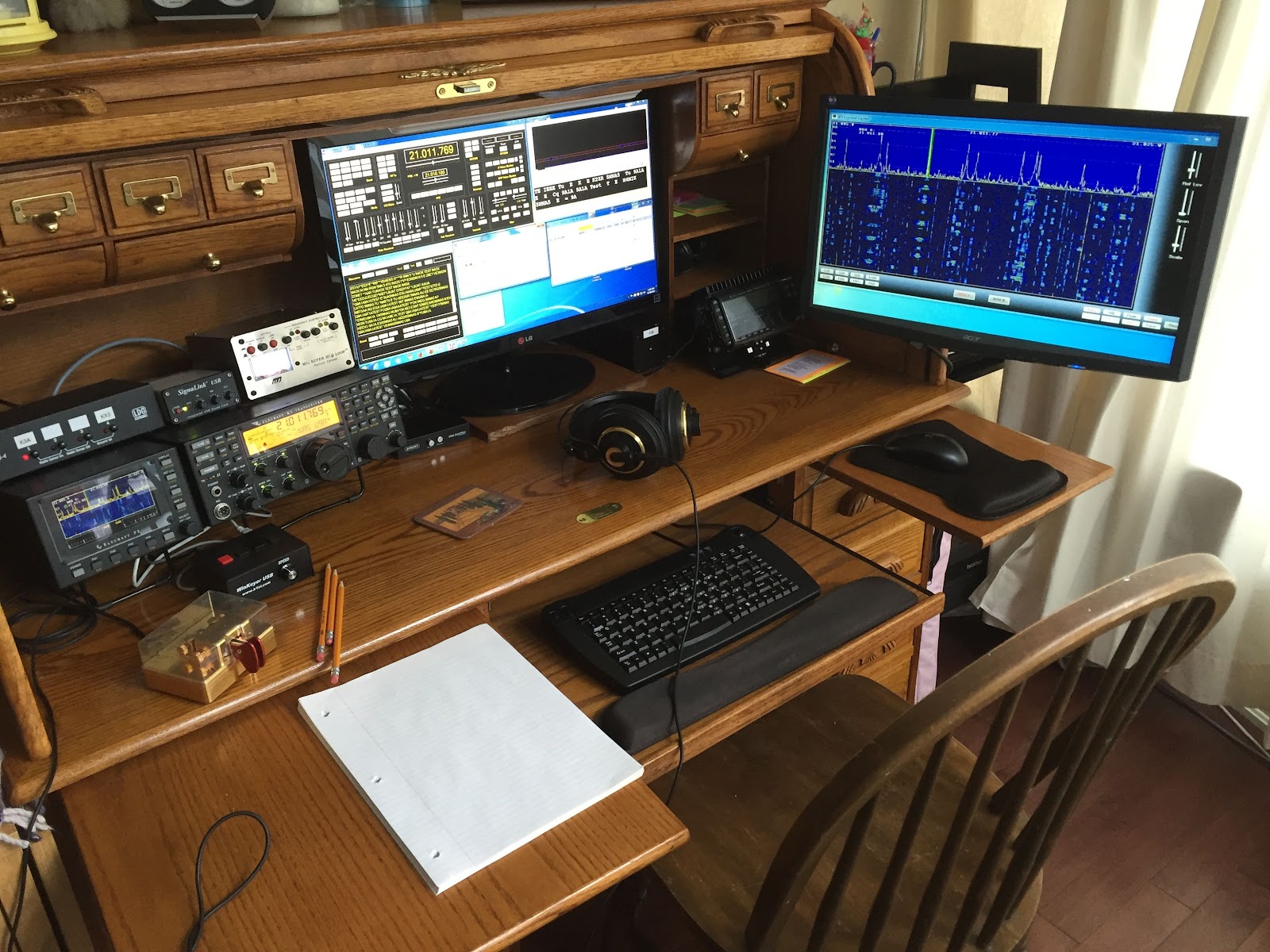
IARU HF World Championship contest
A CW contest surprise!

January VHF Contest Plus SOTA
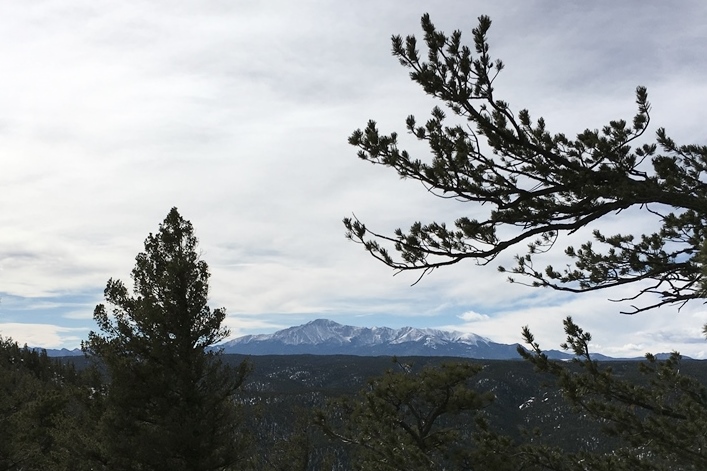
A view of Pikes Peak from Mt Herman.
It’s been a while since I’ve done a January VHF contest from a mountaintop so I decided to give it a try from Mount Herman this year. The ARRL recently changed the contest rules to allow the use of the national 2m fm calling frequency for contests. See Coming Soon: 146.52 MHz in ARRL VHF Contests. I wanted to see how this change would play out in practice when doing a combination VHF Contest plus SOTA activation. In previous attempts, I had to vector the SOTA activity to another 2m fm frequency for it to be a legal contact for the contest. The SOTA + Contest operation is attractive because it has all the elements of a fun SOTA hike coupled with the increased activity of a VHF contest. The contest brings out the weak-signal folks with very capable stations, increasing the probability of making some good DX contacts.
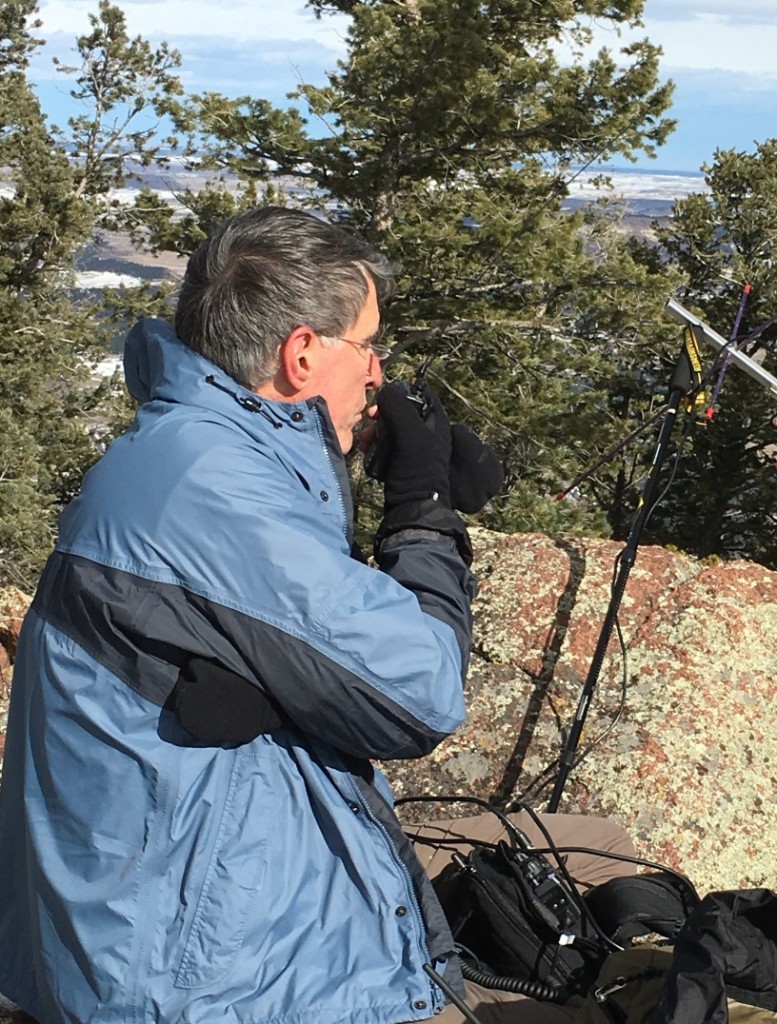
Bob K0NR using an HT to make contacts on 446.0 MHz FM.
Joyce KØJJW and I hit the trail at 10:30 AM local with the goal of being at the summit around noon (1900 UTC) for the start of the ARRL contest. The trail was icy, but manageable with the gripping devices on our boots. The weather was chilly but not bad for January. At the summit, I configured my FT-60 handheld radio for 146.52 MHz using a 2m half-wave vertical. My first call netted a QSO with Tim, KAØMWA in Castle Rock. I worked a few other stations on 2m fm and then set up the 2m ssb station (FT-817 plus Arrow II antenna). On 144.200 MHz SSB, I contacted two Wyoming stations in grid DN71, about 140 miles away. I also gave a call on 446.0 MHz fm and worked W3DHJ and KE0HBW mobile.
Freq    Mode    UTC     Call     Grid
146.52    FM    1900    KA0MWA   DM79
146.52    FM    1902    N0AXK    DM79
146.52    FM    1905    N0LP     DM79
146.52    FM    1905    K0GPA    DM79
146.52    FM    1905    WG0AT    DM79
146.52    FM    1920    N0ISB    DM78
146.52    FM    1923    N0LEA    DN70
144.2    SSB    1932    WY7KY    DN71
144.2    SSB    1935    K0ALE    DM79
144.2    SSB    1938    AB0YM/R  DM79
144.2    SSB    1939    KG0RP    DN70
144.2    SSB    1940    WA7KYM   DN71
144.2    SSB    1942    KC4YLV   DM79
446.0    FM     1948    W3DHJ    DM78
144.2    SSB    1949    WE7L     DM79
144.2    SSB    1951    N0SP     DM79
446.0    FM     2000    KE0HBW   DM79
The wind was strong at the summit and kept blowing everything around, making it difficult to operate the radio and manage the antennas. After an hour of operating, I decided to QRT and head on down. I know I missed a bunch of potential contacts, especially having not gotten on 70 cm and 6m ssb.
Except for the short operating time, the operation played out as expected. I was able to work the SOTA folks and 2m fm enthusiasts on 146.52 MHz. I made it a point to not hog the calling frequency, as there are quite a few folks that monitor there. Switching over to 2m ssb, I worked the contest crowd, typically with more capable vhf stations. My score is a whopping 114 points, in the single-op portable category.
Thanks to everyone that got on the air to play radio that day!
73, Bob KØNR
The post January VHF Contest Plus SOTA appeared first on The KØNR Radio Site.
NPOTA: ARRL’s Best Idea?
 The National Parks on the Air (NPOTA) is off and running. Making contact with a handful of stations currently operating from NPOTA locations has made me wonder if the ARRL has had a good idea with NPOTA as a way to help celebrate the anniversary of the National Park Service.
From ARRL: “Throughout 2016, Amateur Radio will be helping the National Park Service celebrate their 100th anniversary. Hams from across the country will activate NPS units, promote the National Park Service and showcase Amateur Radio to the public.”
I am a huge fan of both the National Parks and the National Park Service. Anyone who is interested in the history of our National Parks would be well rewarded to start with the Ken Burns documentary The National Parks: America’s Best Idea. Yellowstone generally gets credit for being the first National Park back in 1872. However, the National Park Service was not established until 1916. That period in between provides us a very good reason that there are times when we need a government organization to protect us from ourselves. During that in between period, the Army was given the mission of attempting to protect both Yellowstone and Yosemite. Like most missions the Army received, they were underfunded, under equipped, and undermanned. They did, however, do the best they could to protect these amazing areas. Many Americans saw these new National Parks as areas for economic exploitation. If it wasn’t for many individuals working long and hard for the establishment of the National Park Service, it is very likely we would not be able to enjoy the parks we have today. Stephen Mather and Horace Albright were the two primary individuals who secured the establishment of the National Park Service. Ken Burns talks about these two individuals in his documentary and there are also a few books that do a great job telling the story (Creating the National Park Service: The Missing Years and The Birth of the National Park Service: The Founding Years, 1913-33).

The National Parks exist for our enjoyment. Generally that enjoyment manifests itself in some type of hiking, camping, fishing, watching for wildlife, or learning about history. This interaction between Park and citizen can be passionate, emotional, revitalizing, inspirational, and an educational experience.
With all that being said, I was a bit surprised to hear stations making contacts for NPOTA locations like it was a contest. Each NPOTA location is identified by a letter-number combination. No discussion of where they actually were. No description, no discussion. It is a bit sad to see there is a Leader Board – which only facilitates looking at NPOTA as a contest rather than an actual celebration.
I also wonder how these activations are impacting those non-amateur radio enthusiasts who are visiting a NPOTA site. Is this putting amateur radio in the best light?
Are these NPOTA activations promoting the National Park Service or showcasing Amateur Radio to the public?
If so, how?
What would Stephen Mather and Horace Albright think about NPOTA?
It will be interesting to see how NPOTA progresses over the coming weeks and months.
My CQ WW CW contest overview.
 |
| The QRP setup |

Since I am operating QRP and using small MFJ loop antenna on the balcony my operating style was as follows
- I Use my VFO B to save a strong DX station that at the time has a huge pileup going. This stops me from wasting time trying to break the pile. Better to come back when the crazy pileup is gone. This worked great when I came across a Senegal station.
- Even when a station is at an S2 level but is just calling and listening my 5 watts can and did many times make it through for a contact.
- I don't use a spotting network as I found most of these stations have a huge pileup but I do have an Elecraft P3. Using some hardware and software my P3 is seen on a 19 inch monitor and I am able to point and click on signals. My K3 then moves to that signal this allows me to see the activity on the band and Search and pounce these stations.
- When possible stay with a band such as 15m were my MFJ loop does not need to be retuned at all across the whole CW portion.
- Stick with my 250hz Inrad 8 pole CW filter so I can get between tight signals and only hear the op I want to contact.
In my post I am going to go into detail about my software I am now using and finding to be great for contesting and general QSO's It's now time to grab some eats and relax.